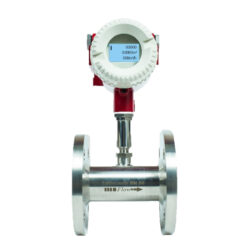
Micro Mass Flow Meters
A micro mass flow meter is a highly precise instrument designed to measure the mass flow rate of very small quantities of gases or liquids. Leveraging advanced thermal mass flow measurement technology, it determines flow rates based on how heat is carried away by the fluid. The device typically features a compact, microfabricated structure with built-in temperature sensors and a heater. As the fluid flows through the meter, it absorbs heat from the heater, and the sensors measure the resulting temperature difference. This measurement is then used to calculate the mass flow rate with exceptional accuracy.
Micro mass flow meters are valued for their high precision, fast response times, and ability to handle very low flow rates. They are ideal for applications in fields such as pharmaceuticals, semiconductor manufacturing, and environmental monitoring, where precise fluid measurement is critical. Their small size allows for integration into compact systems, making them suitable for use in space-constrained environments.
However, these meters can be costly and require careful calibration and maintenance to ensure accuracy. They may also be sensitive to environmental conditions such as temperature and pressure changes. Despite these challenges, the advantages of micro mass flow meters in providing accurate, real-time measurements make them essential tools in various high-precision applications. Regular maintenance, including calibration and inspection, is key to maintaining their performance and reliability.
Description

Micro mass flow meters are a sophisticated device designed to measure the mass flow rate of gases or liquids at very small scales. Unlike traditional flow meters, which measure volumetric flow and then convert it to mass flow, a micro mass flow meter directly measures the mass flow rate using advanced technology. This device is integral in applications where precision and accuracy at micro-scale levels are crucial, such as in chemical processes, pharmaceuticals, electronics manufacturing, and research laboratories.
At its core, Micro mass flow meters operate based on the principle of thermal mass flow measurement. This principle relies on the interaction between the flow of the fluid and temperature sensors. The meter consists of a small, often intricate, structure that houses these sensors, typically in the form of a microfabricated device or chip. The technology behind micro mass flow meters incorporates elements of micro-electromechanical systems (MEMS), which allows for the production of extremely small and highly sensitive flow meters.
Operation of Micro Mass Flow Meters
Micro mass flow meters operate through a precise combination of components and steps. They typically include a heater and a temperature sensor. The heater creates a temperature difference along the flow path, and as the fluid passes through, it absorbs heat. The amount of heat absorbed is directly proportional to the fluid’s mass flow rate. By monitoring the temperature difference between the heater and the sensor, the device accurately calculates the flow rate.
These meters excel at measuring extremely low flow rates, which is critical in applications where minor variations can cause significant issues. For instance, pharmaceutical manufacturing demands accurate dosing of reactants and solvents to maintain product consistency. Likewise, in electronics production, controlling gas flows during chemical vapor deposition (CVD) is essential to ensuring high-quality semiconductor devices.
Compact Design and Efficiency
Thanks to miniaturization, micro mass flow meters offer several advantages over traditional models. Their compact size allows integration into systems with tight space constraints. Their high sensitivity makes them ideal for environments requiring precise measurements at very low flow rates. The incorporation of MEMS technology also enhances their durability, allowing them to perform reliably even under harsh conditions.
Their rapid response times are another major strength. By using advanced materials, these meters react quickly to thermal and electrical changes, delivering real-time data for better process control and efficiency. This responsiveness helps optimize operations, reduce waste, and maintain high product quality.
Challenges of Micro Mass Flow Meters
Despite their advantages, micro mass flow meters present some challenges. Their sophisticated design and high-precision manufacturing contribute to a higher cost compared to conventional flow meters. Their extreme sensitivity requires careful handling and regular calibration to maintain performance. Environmental factors like temperature swings and pressure fluctuations can impact accuracy if not properly managed.
Calibration remains crucial for ensuring consistent, reliable measurements. Typically, this involves comparing the device’s readings to a reference flow standard and making necessary adjustments. Regular recalibration is especially important in industries where even the slightest deviation can affect product quality or safety.
Applications Across Industries
Micro flow meters play a vital role in various fields. In the chemical industry, they help monitor and control chemical flows in reactors and mixing systems. Pharmaceutical manufacturers rely on them for precise dosing and ensuring batch consistency. The semiconductor industry uses these meters to regulate gas flows during deposition and etching processes. They also serve important roles in environmental monitoring, medical equipment, and laboratory research, where accurate fluid measurement is essential.
Driving Technological Advancements
Progress in microfabrication and MEMS technology has been instrumental in advancing micro mass flow meters. These innovations have led to smaller, more accurate, and more versatile devices. As research continues, improvements in precision, durability, and application range are expected, further expanding their usefulness across industries.
Conclusion
A Micro mass flow meter stands out as an advanced tool for measuring low mass flow rates with exceptional accuracy. Their thermal-based operation, combined with features like miniaturization, rapid response, and high sensitivity, makes them indispensable in many modern industries. Although they require careful calibration and involve higher costs, the benefits they offer far outweigh these drawbacks. With ongoing technological development, their reliability and versatility are set to reach even greater heights.
Other Flow Meters
Coriolis Flow Meter
Thermal Mass Flow Meter
Turbine Flow Meter
Electromagnetic Flow Meter
Specifications
Thermal Mass Gas Flow Meter with Valve Option
Suitable for a variety of Dry, Clean Gases (User Configurable)
DN6, 0 – 20 SLPM (42.38 SCFH, 1.20 NCMH)
Hi/Low Alarm configuration (Visual & Audible alert)
1/4″ BSP (or NPT)
Thermal Mass Flow Measurement,
RS485 Modbus RTU output option
Integrated Valve option
4x AA Batteries or USB Type-C Powered
Features
- Accuracy ±(2.0+0.5FS) %
- Repeatability 0.5 %
- Turn-down ratio 80:1
- Response time
- Working temperature -10~55 °C
- Maximum pressure 0.8 MPa (8 Bar)
- Humidity <95%RH noncondensing
- Maximum overflow MF5706=100 MF5708=200 MF5712=400 L/min
- Maximum flow change MF5706=15 MF5708=30 MF5712=60 L/min
- Pressure loss MF5706=0.6 MF5708=1.0 MF5712=2.0 kPa
- Power supply 4-AA batteries (LR6) / 5~24 Vdc
- Power consumption >60 (on batteries) day
- Power / data interface USB Type-C
- Digital RS485 Modbus half-duplex
- Wireless options LoRa / WIFI / NB-IoT / BT LE Display
- LCD Resolution 0.01 L/min (instant) / 1 L (accumulated)
- Mechanical connection MF5706=BSPP 1/4 BSPP MF5708=3/8” MF5712=BSPP 1/2”
or MF5706=NPT 1/4” or MF5708=NPT3/8” or MF5712=NPT/ 1/2”
- Storage temperature -20 ~ 70 °C
- Calibration Reference conditions 20°C, 101.325 kPa, air
- Ingress Protection IP50
- Gas compatibility Non-corrosive
- ♦ CE EN61326-1; -2; -3
Installation
Installing a micro mass flow meter requires careful attention to detail to ensure accurate measurements and reliable operation. Follow these steps to properly install a micro mass flow meter:
Pre-Installation Preparation
- Read the Manual: Before beginning the installation, thoroughly review the manufacturer’s manual for specific instructions related to your micro mass flow meter model.
- Check Specifications: Confirm that the meter is suitable for your application in terms of flow rate range, fluid type, temperature, and pressure conditions.
- Gather Tools and Equipment: Prepare any necessary tools, such as wrenches, sealants, or adapters, and ensure that you have the appropriate safety equipment.
System Shutdown and Depressurization
- Turn Off the System: Shut down the system where the flow meter will be installed to prevent any accidental fluid flow or pressure.
- Depressurize the System: Carefully release any pressure from the lines to ensure a safe installation environment.
Inspect the Installation Area
- Clean the Installation Site: Ensure that the area where the meter will be installed is clean and free of debris to prevent contamination or damage.
- Check Pipe Alignment: Verify that the pipes or tubing leading to and from the meter are properly aligned. Misalignment can cause measurement inaccuracies or damage to the meter.
Prepare the Pipe or Tubing
- Verify Compatibility: Ensure that the pipe or tubing is compatible with the flow meter’s connection type and size.
- Install Adapters: If necessary, install appropriate adapters or fittings to match the meter’s connections with the pipe or tubing.
Install the Flow Meter
- Orientation: Install the flow meter in the correct orientation as specified by the manufacturer. Many micro mass flow meters need to be installed vertically to ensure accurate measurements.
- Connection: Connect the flow meter to the pipe or tubing. Use the correct fittings and ensure that they are tightened securely without over-tightening. Over-tightening can damage the meter or cause leaks.
- Seal Connections: Apply appropriate sealants or gaskets if recommended by the manufacturer to prevent leaks. Ensure that all connections are properly sealed.
Check for Proper Flow Profile
- Straight Pipe Requirements: Ensure that there is sufficient straight pipe length upstream and downstream of the flow meter to achieve a stable flow profile. The manufacturer’s manual will provide guidance on the required lengths.
- Avoid Turbulence: Ensure that the flow meter is not installed near bends, valves, or other obstructions that could cause flow turbulence and affect measurement accuracy.
Electrical and Communication Connections
- Power Supply: Connect the meter to its power supply as specified in the manual. Ensure that the power supply meets the meter’s voltage and current requirements.
- Signal Wiring: Connect any signal output or communication lines as required. Follow the manufacturer’s wiring diagrams and ensure that connections are secure and properly insulated.
System Startup and Testing
- Gradual Startup: Slowly restart the system and gradually increase the flow to avoid sudden pressure changes that could damage the meter or cause leaks.
- Check for Leaks: Inspect all connections for leaks and tighten them if necessary. Address any leaks before proceeding.
- Verify Operation: Test the flow meter by comparing its readings with a known reference flow standard. Check for proper operation and ensure that the readings are accurate.
- Calibrate if Necessary: Perform calibration if required, following the manufacturer’s instructions to ensure accurate measurement.
Documentation and Final Checks
- Record Installation Details: Document the installation details, including the meter model, installation date, and any calibration data.
- Review Settings: Check and configure any settings or parameters on the flow meter according to the application requirements.
- Safety Checks: Ensure that all safety protocols are followed, and that the system is operating correctly without any issues.
Ongoing Maintenance and Monitoring
- Regular Inspections: Periodically inspect the flow meter and its connections for any signs of wear or damage.
- Calibration Schedule: Follow a regular calibration schedule to maintain measurement accuracy.
- System Monitoring: Continuously monitor the performance of the flow meter during operation to ensure it is functioning as expected.
By following these installation procedures, you can ensure that your micro mass flow meter is properly set up for accurate and reliable performance in your specific application. Proper installation and maintenance are crucial for optimizing the meter’s functionality and extending its service life.
Maintenance
Maintaining a micro mass flow meter is essential to ensure its accuracy, reliability, and longevity. Regular maintenance helps prevent issues, extends the life of the instrument, and ensures consistent performance. Follow these procedures to keep your micro mass flow meter in optimal condition:
Routine Inspections
- Visual Checks: Regularly inspect the flow meter for visible signs of wear, damage, or contamination. Look for cracks, leaks, or any physical damage to the meter or its connections.
- Connection Integrity: Ensure that all connections and fittings are secure and free from leaks. Check for any signs of looseness or corrosion.
Cleaning
- Follow Manufacturer’s Guidelines: Always use cleaning methods and materials recommended by the manufacturer to avoid damaging sensitive components. Refer to the user manual for specific cleaning instructions.
- Fluid Residue: If there is a build-up of residue or contaminants inside the meter, clean it according to the manufacturer’s recommendations. Use appropriate cleaning agents that are compatible with the meter’s materials.
- Avoid Abrasives: Do not use abrasive materials or harsh chemicals that could damage the flow meter. Instead, use soft cloths and non-abrasive cleaning solutions.
Calibration
- Regular Calibration: Perform calibration at regular intervals as specified by the manufacturer. Calibration ensures that the flow meter provides accurate measurements and should be done using a known reference standard.
- Recalibration Needs: Recalibrate the meter if there are significant changes in operating conditions, such as temperature, pressure, or fluid properties. Additionally, recalibrate if you notice discrepancies in measurement accuracy.
- Documentation: Document all calibration activities, including the date, the calibration standard used, and any adjustments made to the meter.
Functional Testing
- Verify Accuracy: Periodically test the flow meter’s accuracy by comparing its readings with a known reference flow standard. Ensure that the readings are within the acceptable tolerance levels.
- Check Response Time: Test the meter’s response time to ensure it reacts appropriately to changes in flow rate. A significant delay or inconsistency may indicate a problem.
Check for System Interference
- Environmental Factors: Ensure that the flow meter is not exposed to extreme environmental conditions such as excessive heat, cold, or vibration, which can affect its performance.
- Electromagnetic Interference: Check for sources of electromagnetic interference that could affect the meter’s electronic components and signal processing.
Inspect and Replace Components
- Sensor Inspection: Regularly inspect temperature sensors and other critical components for signs of wear or degradation. Replace any faulty sensors or components according to the manufacturer’s guidelines.
- Gaskets and Seals: Check gaskets and seals for wear and tear. Replace them if they show signs of damage or leakage.
Verify Installation Conditions
- Flow Profile: Ensure that the flow meter is still installed in accordance with the manufacturer’s guidelines regarding pipe alignment and flow profile. Misalignment or changes in the installation environment can affect accuracy.
- Support Structure: Verify that the meter is properly supported and that no stress or vibration is affecting its performance.
Software and Firmware Updates
- Check for Updates: If your micro mass flow meter includes software or firmware, regularly check for updates from the manufacturer. Updates can improve functionality, fix bugs, or add new features.
- Apply Updates: Follow the manufacturer’s instructions to apply any updates safely and correctly.
System Documentation
- Maintenance Records: Keep detailed records of all maintenance activities, including inspections, cleaning, calibrations, and any repairs or component replacements.
- Operating Conditions: Document any changes in operating conditions that might affect the flow meter’s performance.
Professional Servicing
- Manufacturer Support: For complex issues or repairs, consult the manufacturer or a professional service provider. They can offer specialized support and services to address any technical problems with the meter.
- Service Contracts: Consider establishing a service contract with the manufacturer or a certified service provider for regular maintenance and support.
By following these maintenance procedures, you can ensure that your micro mass flow meter remains accurate, reliable, and in good working condition. Regular maintenance helps prevent unexpected failures, extends the lifespan of the meter, and ensures that it continues to perform optimally in its intended application.
Q&A
Q: What is a micro mass flow meter?
A: A micro mass flow meter is a highly precise instrument designed to measure the mass flow rate of very small quantities of gases or liquids. It operates based on the principle of thermal mass flow measurement, where the flow rate is determined by the rate at which heat is carried away by the flowing fluid. The meter is often used in applications requiring high accuracy and sensitivity due to its small size and advanced technology.
Q: What are the key advantages of using a micro mass flow meter?
A: The key advantages of a micro mass flow meter include:
- High Precision and Accuracy: They provide highly accurate measurements of very small flow rates, which is critical in applications where precision is essential.
- Miniaturization: Their compact size allows for integration into small or complex systems with limited space.
- Fast Response Time: They offer rapid response to changes in flow rates, which is beneficial for dynamic processes.
- Low Flow Rate Measurement: Effective at measuring very low flow rates, making them suitable for microfluidics and laboratory applications.
- No Moving Parts: Many models feature no moving parts, reducing the risk of mechanical failure and maintenance needs.
- Minimal Power Consumption: They generally consume little power, which is advantageous for battery-operated or portable systems.
Q: Are there any disadvantages to using a micro mass flow meter?
A: Yes, there are some disadvantages:
- Higher Cost: The advanced technology and miniaturization involved can make them more expensive than traditional flow meters.
- Sensitivity to Environmental Conditions: They can be affected by temperature fluctuations and pressure changes, which may require careful calibration and compensation.
- Calibration Requirements: Regular calibration is needed to maintain accuracy, which can be time-consuming and may require specialized equipment.
- Limited Range: They may not be suitable for measuring higher flow rates due to their design constraints.
- Complex Integration: Integrating these meters into existing systems can be challenging due to their specialized design and size.
- Maintenance Sensitivity: They require careful handling, as contamination or damage to sensitive components can impact performance.
Q: What types of applications are micro mass flow meters used for?
A: Micro mass flow meters are used in a variety of applications, including:
- Pharmaceutical Industry: For precise dosing and mixing of ingredients in drug production.
- Chemical Manufacturing: To measure and control the flow of chemicals in reactors and mixing tanks.
- Semiconductor Industry: For controlling gas flows in processes such as chemical vapor deposition (CVD).
- Medical and Biotechnology Applications: In medical devices like ventilators and anesthesia machines, and in laboratory experiments.
- Environmental Monitoring: To measure gas and liquid flows in air quality monitoring and water treatment.
- Food and Beverage Industry: For ingredient dosing and quality control in production processes.
- Aerospace and Defense: For monitoring fluids in propulsion systems and spacecraft.
- Research and Development: In laboratories for precise fluid handling and experimental control.
- Automotive Industry: In fuel injection systems and fuel efficiency testing.
- Oil and Gas Industry: For measuring trace gases and monitoring low-flow applications.
Q: How do micro mass flow meters work?
A: Micro mass flow meters typically use a thermal mass flow measurement principle. They feature a heater and temperature sensors within a small, often microfabricated structure. The heater warms the fluid flowing through the meter, and the temperature sensors measure the heat carried away by the fluid. The rate at which heat is removed is proportional to the mass flow rate of the fluid. By analyzing the temperature difference between the heater and the sensors, the meter calculates the flow rate accurately.
Q: What are the calibration requirements for micro mass flow meters?
A: Calibration of micro mass flow meters involves comparing the device’s readings with a known reference flow standard. This process ensures that the meter provides accurate measurements. Calibration should be performed regularly and whenever there are significant changes in process conditions or after maintenance. The specific calibration procedure can vary depending on the manufacturer’s guidelines and the meter’s design.
Q: Can micro mass flow meters be used in high-pressure or high-temperature applications?
A: Micro mass flow meters generally have limitations regarding high-pressure and high-temperature environments. While some specialized models can handle higher pressures and temperatures, many standard models are not designed for such extreme conditions. It is essential to consult the manufacturer’s specifications to determine if a particular micro mass flow meter is suitable for your specific application requirements.
Q: How do I choose the right micro mass flow meter for my application?
A: To choose the right micro mass flow meter, consider the following factors:
- Flow Rate Range: Ensure the meter can accurately measure the range of flow rates required for your application.
- Fluid Type: Verify that the meter is compatible with the type of fluid you will be measuring (gas or liquid).
- Environmental Conditions: Take into account temperature, pressure, and potential contaminants that might affect the meter’s performance.
- Size and Integration: Check that the meter’s size fits within your system and that it can be integrated effectively.
- Accuracy and Precision: Confirm that the meter meets the accuracy and precision requirements of your application.
- Budget: Consider the cost relative to your budget and the value it provides in terms of performance and reliability.
This Q&A format provides a comprehensive overview of micro mass flow meters, covering their operation, advantages, disadvantages, applications, and considerations for selection.
Advantages / Disadvantages
Advantages
High Precision and Accuracy: Micro mass flow meters excel in providing precise measurements of very small flow rates. Their advanced sensing technology allows for highly accurate readings, which is crucial in applications where even minor deviations can lead to significant consequences, such as in pharmaceuticals or microelectronics.
Miniaturization: These meters are designed to be extremely compact, making them ideal for integration into small or complex systems where space is limited. Their small size allows for the development of compact, efficient devices and systems without sacrificing measurement accuracy.
Fast Response Time: The rapid response of micro mass flow meters is advantageous in dynamic processes where flow rates can change quickly. They provide near-instantaneous feedback, which enables real-time control and adjustment of processes, enhancing overall system efficiency.
Low Flow Rate Measurement: They are particularly effective in measuring very low flow rates, which is essential for applications requiring high precision at minimal flow levels. This capability makes them suitable for processes involving small volumes of fluids, such as in microfluidics or laboratory experiments.
No Moving Parts: Many micro mass flow meters operate without moving parts, which reduces the risk of mechanical failure and wear over time. This characteristic enhances their reliability and longevity, contributing to lower maintenance requirements.
Integration with MEMS Technology: The use of micro-electromechanical systems (MEMS) technology allows for the integration of micro mass flow meters into complex systems while maintaining high performance. MEMS technology also enables the production of these devices at a relatively low cost compared to traditional precision instruments.
Minimal Power Consumption: Due to their small size and efficient design, micro mass flow meters generally consume minimal power. This feature is beneficial for battery-operated or portable systems, contributing to overall energy efficiency.
Disadvantages
Higher Cost: The advanced technology and miniaturization involved in manufacturing micro mass flow meters can result in higher costs compared to traditional flow measurement devices. This cost may be prohibitive for some applications or organizations with limited budgets.
Sensitivity to Environmental Conditions: Micro mass flow meters can be sensitive to changes in environmental conditions, such as temperature fluctuations and pressure variations. These factors can affect the accuracy and performance of the device, requiring careful calibration and environmental control.
Calibration Requirements: Accurate calibration is essential for maintaining the performance of micro mass flow meters. The need for regular calibration and the use of reference standards can be time-consuming and may require specialized equipment or expertise.
Limited Range: While they are excellent for low flow rate measurements, micro mass flow meters may have limitations in measuring higher flow rates. This restriction means they may not be suitable for all types of applications, particularly those involving large volumes of fluid.
Complexity of Integration: Integrating micro mass flow meters into existing systems can be complex due to their small size and specialized design. Proper installation and alignment are crucial for accurate measurements, and additional considerations may be required to ensure compatibility with other system components.
Maintenance Sensitivity: Although they have fewer moving parts, micro mass flow meters still require careful handling and maintenance. Any contamination or physical damage to the sensitive components can affect their accuracy and functionality.
Limited Robustness: Due to their delicate construction and small size, micro mass flow meters may not be as robust as larger, more rugged flow meters. They may be more susceptible to damage from harsh environmental conditions or mechanical impacts.
In summary, micro mass flow meters offer significant advantages in terms of precision, miniaturization, and response time, making them ideal for applications requiring accurate measurements of very small flow rates. However, they also present challenges such as higher costs, sensitivity to environmental conditions, and complex integration requirements. Balancing these factors is crucial when selecting a micro mass flow meter for a specific application.
Applications
Micro mass flow meters are highly specialized instruments designed for precise measurement of very small flow rates of gases or liquids. Their unique features make them suitable for a wide range of applications across various industries. Here are some key applications where micro mass flow meters are particularly valuable:
Pharmaceutical Industry
In the pharmaceutical industry, micro mass flow meters are used for precise dosing and mixing of ingredients in drug production. Accurate measurement of reactants, solvents, and additives is critical for maintaining the consistency and quality of pharmaceutical products. They are also employed in process control during the production of injectable drugs and in the formulation of high-precision medications.
Chemical Manufacturing
Micro mass flow meters play a crucial role in chemical manufacturing processes where accurate flow measurement of reactants and products is essential. They are used in chemical reactors, mixing tanks, and for controlling the flow of corrosive or hazardous chemicals. The precision of these meters ensures that chemical reactions proceed as intended, enhancing product yield and quality while minimizing waste.
Semiconductor Industry
In semiconductor manufacturing, precise control of gases used in processes like chemical vapor deposition (CVD) and plasma etching is vital. Micro mass flow meters are used to measure and regulate the flow of gases such as silicon, nitrogen, and oxygen. Accurate gas flow control ensures the production of high-quality semiconductor wafers and components.
Medical and Biotechnology Applications
Micro mass flow meters are utilized in medical devices and biotechnology applications for precise control and measurement of fluids. In respiratory equipment, such as ventilators and anesthesia machines, they monitor and regulate the flow of gases to ensure patient safety and comfort. They are also used in laboratory experiments and bioreactors for precise fluid handling and monitoring.
Environmental Monitoring
In environmental monitoring, micro mass flow meters are used to measure the flow rates of gases and liquids in various settings, including air quality monitoring stations and water treatment facilities. Their sensitivity and accuracy help in detecting pollutants and ensuring compliance with environmental regulations.
Food and Beverage Industry
The food and beverage industry relies on micro mass flow meters for precise ingredient dosing, mixing, and quality control. They are used in processes such as flavoring, carbonation, and in the production of beverages where exact measurements are crucial for product consistency and safety.
Aerospace and Defense
Micro mass flow meters are employed in aerospace and defense applications for monitoring and controlling the flow of fuel, oxidizers, and other fluids in propulsion systems and spacecraft. Their accuracy and reliability are essential for the performance and safety of aerospace systems.
Research and Development
In research and development laboratories, micro mass flow meters are used for precise fluid handling and measurement in experiments and prototypes. They provide researchers with accurate data for analyzing fluid behavior, optimizing processes, and developing new technologies.
Automotive Industry
The automotive industry uses micro mass flow meters for fuel injection systems and in the testing of fuel efficiency and emissions. Accurate measurement of fuel and air flow rates is crucial for optimizing engine performance and meeting emissions standards.
Oil and Gas Industry
In the oil and gas industry, micro mass flow meters are used in applications such as gas injection, measurement of trace gases, and monitoring of low-flow applications. Their precision is important for ensuring the accurate delivery of additives and chemicals in various processes.
In summary, micro mass flow meters are versatile tools with applications spanning a wide range of industries. Their ability to measure very small flow rates with high accuracy makes them indispensable in fields where precise fluid measurement and control are critical. From pharmaceutical manufacturing to environmental monitoring, these devices play a vital role in ensuring process efficiency, product quality, and safety across diverse applications.
Drawings